
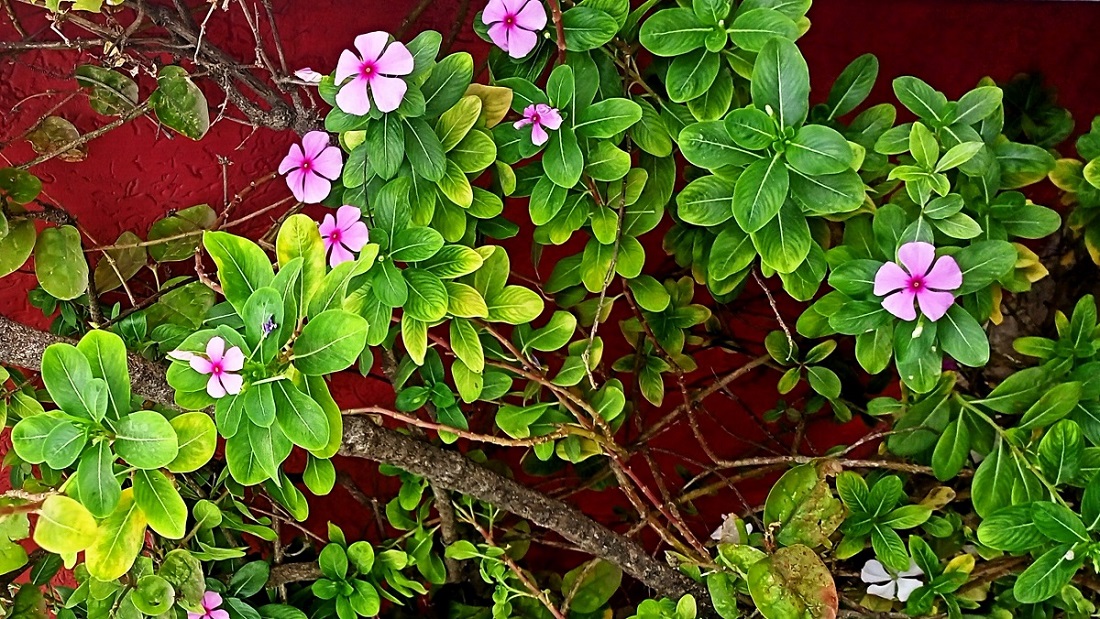
Catharanthus roseus (Madagascar Periwinkle) is a popular flowering shrub grown for its colorful blooms and long flowering period in warm weather. Common names include Rosy Periwinkle and Vinca. People often grow it in gardens, borders, and containers.
A resilient plant for warm climates
Catharanthus roseus typically grows between 30 and 100 cm tall, depending on soil, sunlight, and how it is maintained. The leaves are usually oval and arranged oppositely along the stem. In suitable conditions, it produces small five-petaled flowers in colors such as pink, rose, red, and white.
Sunlight, soil, and watering (simple care guide)
This plant does best when the basic growing conditions are right. Use the points below as a practical checklist:
- Sunlight: Full sun to light shade. More sun usually means more flowers.
- Soil: Well-drained soil. If your soil stays wet, improve drainage.
- Watering: Water regularly at first, then water when the top layer of soil starts to dry.
- Frost: Avoid frost. In colder places, many gardeners grow it in pots or treat it like an annual.
Maintenance for better flowering
For healthier growth: remove dead or damaged leaves, and remove spent flowers if your climate encourages continuous blooming. If the plant becomes too tall or untidy, you can do light pruning to shape it. A balanced fertilizer (as directed on the label) can support growth during the main growing season.
Why this plant is studied (science note)
Catharanthus roseus contains natural chemical compounds (alkaloids). Because of these chemicals, researchers have studied the plant and its related compounds for medical research. Some medicines are developed from research in controlled laboratory and medical settings—this is not the same as using the plant directly at home.
⚠️ Important Safety Warning: Catharanthus roseus can be toxic. Do not ingest any part of the plant. Keep it away from children and pets, and avoid handling it and then touching your eyes or mouth.
Gardening uses
Because it is colorful and adapts well when grown correctly, it is commonly used for:
- Flower beds and edging
- Pots, containers, and balcony gardening
- Warm-climate landscaping
Quick FAQ
Q: Can I grow it from seeds?
Yes, but germination and growth depend on temperature and care. Many people also buy seedlings for easier results.
Q: Does it need a lot of water?
No—avoid waterlogging. Water when the soil dries slightly, especially in pots.
Q: Is it safe for pets?
No. Keep it out of reach because parts of the plant may be toxic if eaten.
Q: What if temperatures get cold?
Cold or frost can damage the plant. In colder areas, grow it as an annual or protect it indoors.
Additional Reading
- Royal Botanic Gardens, Kew: Catharanthus roseus: A cancer-killing champion of the plant world
- NCBI / PubMed: The Catharanthus alkaloids: pharmacognosy and biotechnology (review)
- NC State Extension (plant profile): Catharanthus roseus