
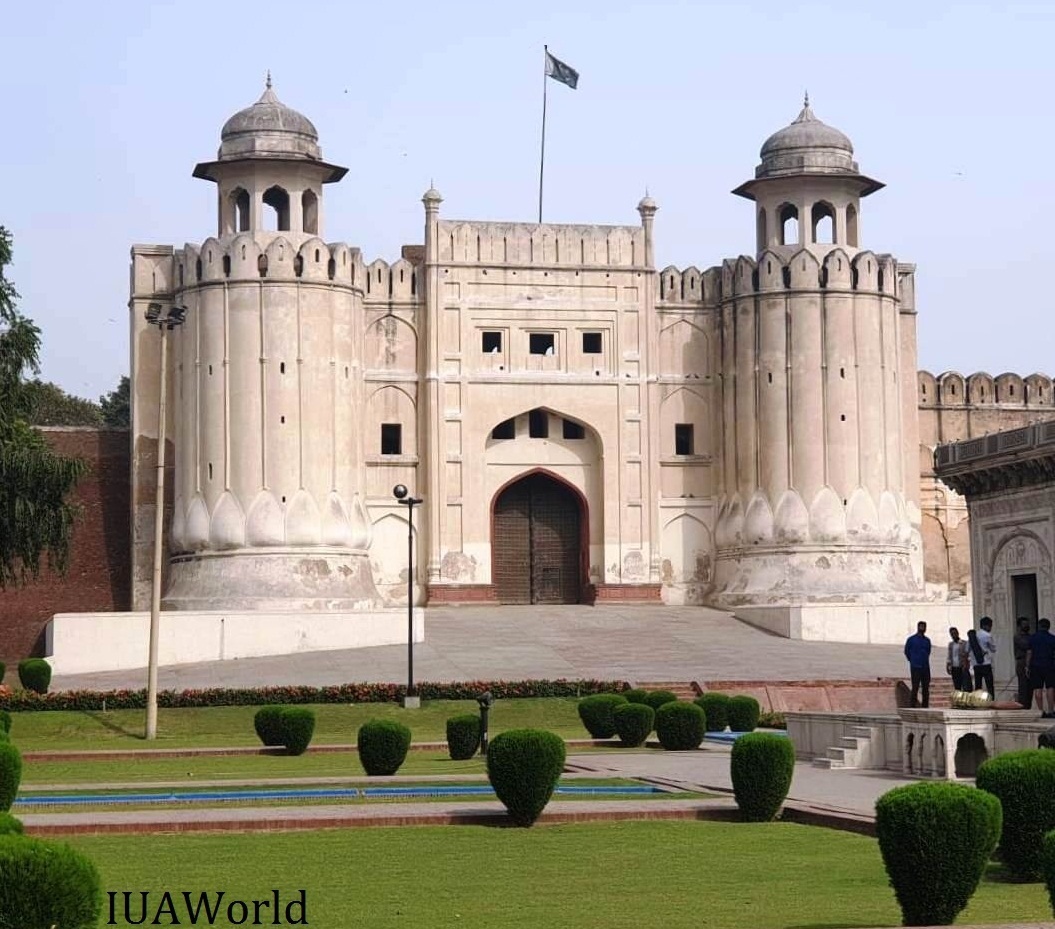
The Lahore Fort, also known as Shahi Qila, is a renowned historical monument situated in Lahore, Pakistan.Let’s explore the compelling history of this impressive fortification.
Origins and Early History:
The Lahore Fort has its roots in ancient times, with evidence of a mud fort dating back to the 2nd century. The fort in its current form was built during the Mughal period under Emperor Akbar in the 16th century.His grandson, Emperor Jahangir, further developed and decorated the fort.
Mughal Rule and Contributions:
The Lahore Fort reached its height during the reigns of Emperor Jahangir and his successor, Emperor Shah Jahan, who made major additions and improvements.Emperor Jahangir introduced palaces, gardens, and a magnificent mosque within the fort.Emperor Shah Jahan constructed the renowned Sheesh Mahal (Palace of Mirrors) and built the elegantly designed Naulakha Pavilion.The fort served as the residence of the Mughal emperors and played a vital role in governance and administrationThe Lahore Fort reached its peak under Emperor Jahangir and his successor, Emperor Shah Jahan, who made significant additions and renovations.Emperor Jahangir added palaces, gardens, and a stunning mosque within the fort premises.Emperor Shah Jahan constructed the iconic Sheesh Mahal (Palace of Mirrors) and created the stunning Naulakha Pavilion.The fort served as the residence of Mughal emperors and played an integral role in governance and administration.
Occupation and Alterations:
After the fall of the Mughal Empire, the fort came under the control of various rulers, each making their own changes.In the early 19th century, the Sikh Empire, led by Maharaja Ranjit Singh, occupied the Lahore Fort and introduced new elements to its architecture.Maharaja Ranjit Singh added structures such as the Haveli Mai Jindan, installed new gates, and enhanced the fort with frescoes and embellishments
British Rule and Preservation:
During the 19th century, the British took control of the Lahore Fort. They used parts of the fort for military and administrative purposes, including barracks and offices.The British also worked to preserve and restore the historical structures within the fort, conducting restoration projects and documenting the architectural features.
Post-Independence:
After the creation of Pakistan in 1947, the Lahore Fort was safeguarded and maintained as an important historical and cultural site. The fort has been carefully restored to retain its original splendor.Today, it draws many visitors who appreciate its architectural beauty, historical importance, and the blend of Mughal, Sikh, and British influences.
Architectural Features:
The Lahore Fort showcases a variety of architectural styles, including Mughal, Persian, and Sikh influences. It features grand palace complexes, royal gardens, detailed stone carvings, intricate tile work, and beautifully painted ceilings.Some of the notable structures within the fort include the Sheesh Mahal, Alamgiri Gate, Moti Masjid, Diwan-e-Aam, and Naulakha Pavilion.
Tourism and Cultural Heritage:
The Lahore Fort is recognized as a UNESCO World Heritage Site and attracts visitors from around the globe. People visit the fort to experience its rich history and admire its architectural grandeur.The fort hosts cultural events, festivals, and exhibitions that highlight the region’s vibrant heritage.The Lahore Fort symbolizes Pakistan’s rich historical legacy, reflecting the brilliance of Mughal architecture.The fort’s historical development, architectural diversity, and cultural value continue to enchant visitors, making it a must-see destination for history lovers and tourists alike