
Common Myna: The City’s Clever Forager
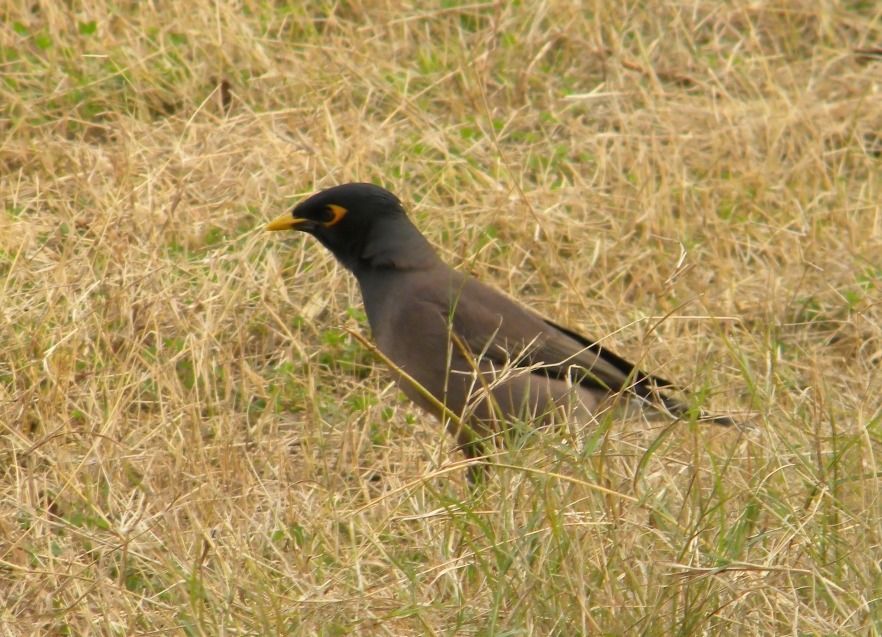
Common Myna (Acridotheres tristis)
Oct 16, 2026
Introduction
If you’ve ever seen a stocky brown bird strutting across roadsides, park lawns, or building edges with a bright yellow face, you’ve likely spotted a Common Myna. Known for its confident personality and loud, varied calls, this bird is also famous for being a very effective urban survivor.
Common Mynas belong to the starling family (Sturnidae). Their look is instantly recognizable—black head, brown body, and distinctive yellow skin around the eye. But their real story is how they spend life: foraging in busy places, communicating with body signals, and adapting their nesting habits to almost whatever is available.
Distinctive Appearance (What to Look For)
- Black hood and chocolate-brown body.
- Bright yellow patch of bare skin behind the eye (great field mark).
- Wing flashes: when they spread their wings, pale areas show strongly.
- Tail tips can appear bright when the bird moves or lifts its tail.
Quick Facts
Acridotheres tristis
Starlings (Sturnidae)
Cities, farms, towns
Insects + fruits + scraps
How They Spend Their Life (Highlighted Factors)
1) Vocal talent: more than typical bird calls
Common Mynas can mimic sounds they hear around them. In many places, you’ll notice them copying whistles, alarm-like noises, or even human-like patterns of sound. In the wild, this flexibility can help with communication and social attention—especially in noisy urban neighborhoods.
2) Wing-flash communication (a real visual signal)
When walking or moving on the ground, Common Mynas sometimes open their wings briefly to show large pale patches. This “wing flash” can act like a quick message—helping the bird signal attention, movement, or alarm to other birds nearby.
3) Ground life expertise: they’re built to forage while walking
Many small birds hop. Common Mynas often walk and strut with confident steps. Their steady movement helps them cover ground efficiently while searching for food—especially insects hiding in grass, along paths, or around human activity.
4) Adaptability (why they thrive near humans)
One reason Common Mynas succeed in towns and cities is their broad diet. They can eat insects, fruits, grains, and also take advantage of food scraps. Their nesting is also flexible: if natural cavities are limited, they may use built structures such as roof edges or openings.
Highlight factor: Flexibility in food + flexible nesting places can lead to rapid population growth in suitable areas.
5) Pair bonding and strong nest defense
Common Mynas often form pair bonds. During nesting season, they can be bold and defensive, protecting their space and young. Mutual behaviors like staying close, coordinated attention, and feeding help strengthen the pair relationship.
Interesting Features That Make Them Stand Out
- Reliable street presence: They’re commonly seen in parks, markets, and farms—where food and nesting sites are available.
- Visual-and-sound communication: Body cues (like wing flashing) work alongside calls.
- Curious foragers: They often investigate open ground and human activity, searching for edible finds.
- Highly adaptable behavior: They can adjust to different local conditions when food availability changes.
Conclusion
The Common Myna is a fascinating bird because it combines distinct looks, smart communication, and strong adaptability. Whether you find them along a roadside or notice their wing flashes during foraging, they offer plenty of “wow” moments for readers who enjoy wildlife and everyday nature.
At the same time, understanding their behavior helps people make informed choices—watch from a distance, respect local wildlife guidance, and learn how different species interact in shared spaces.
References
- BirdLife International. (IUCN Red List entry for Acridotheres tristis): Common Myna. (Acridotheres tristis)
- Global invasive species database: Acridotheres tristis.
- South African National Biodiversity Institute (SANBI): Common Myna.
- Bird Animal Sounds: Myna Bird Sound | Natural Calls & Chirping.
- eBird: Common Myna (Acridotheres tristis.)
Disclaimer
This article is for informational and educational purposes only. In some regions, the Common Myna can be considered an invasive pest due to its impacts on native biodiversity and agriculture. Local regulations vary by country and region. Please do not handle wild birds without the proper permits and guidance from local wildlife authorities. Always follow local laws and advice before taking any action.